
How to Prove a Bona Fide Marriage to USCIS

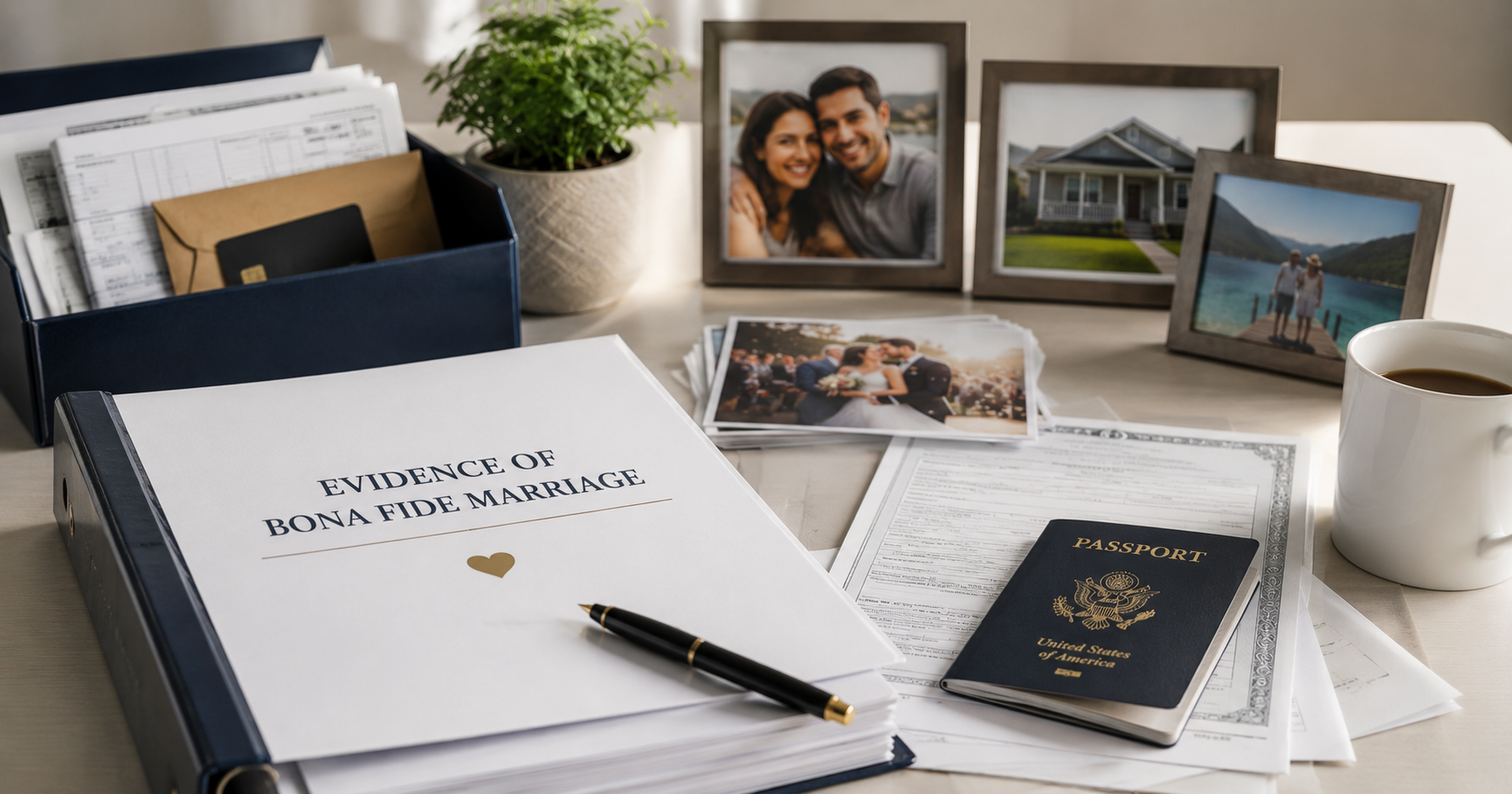
Family Immigration: How to Prove a Bona Fide Marriage to USCIS
Introduction
When a U.S. citizen or lawful permanent resident petitions for a spouse, U.S. Citizenship and Immigration Services (USCIS) generally looks for evidence that the marriage is genuine and was entered into for legitimate reasons—not solely to obtain an immigration benefit. Demonstrating a bona fide marriage can be an important part of the family-based immigration process.
What Is a Bona Fide Marriage?
A bona fide marriage is a real marital relationship in which the spouses intended to build a life together. A marriage certificate establishes that the marriage legally exists, but it may not by itself demonstrate the nature of the relationship. USCIS may consider the circumstances surrounding the marriage and the couple’s shared life.
Evidence can include documents showing shared financial responsibilities, a common residence, insurance coverage, travel, photographs, correspondence, or other records reflecting the couple’s relationship. No single document is necessarily required in every case. The usefulness of evidence depends on the couple’s circumstances and the history of their relationship.
Building a Strong Evidence Package
Couples should generally provide authentic, consistent evidence that helps tell the story of their relationship. For example, joint bank or financial records, a lease or mortgage, utility records, insurance policies, tax documents, and correspondence addressed to both spouses may help demonstrate a shared household or financial life.
Personal evidence can also be relevant. Photographs from different periods of the relationship, records of trips or family events, and other documentation may help establish that the spouses have maintained a genuine relationship over time. Couples should avoid submitting evidence that is altered, misleading, or inconsistent with information previously provided to immigration authorities.
USCIS may also ask questions about the relationship during an interview. Spouses should answer honestly and should not attempt to memorize artificial responses. Differences in ordinary recollections do not necessarily mean a marriage is not genuine, but significant inconsistencies may require explanation.
Conclusion
Proving a bona fide marriage is generally about providing credible evidence that reflects the couple’s genuine relationship and shared life. Because every marriage and immigration case is different, the appropriate evidence can vary considerably. This article provides general information and is not legal advice. Prospective applicants should consider consulting a qualified U.S. immigration attorney about the specific facts of their case, especially when there are unusual circumstances, prior immigration issues, or concerns about the available evidence.