
Timeline for H-1B Visas Applications

Employment Immigration: Timeline for H-1B Visa Applications
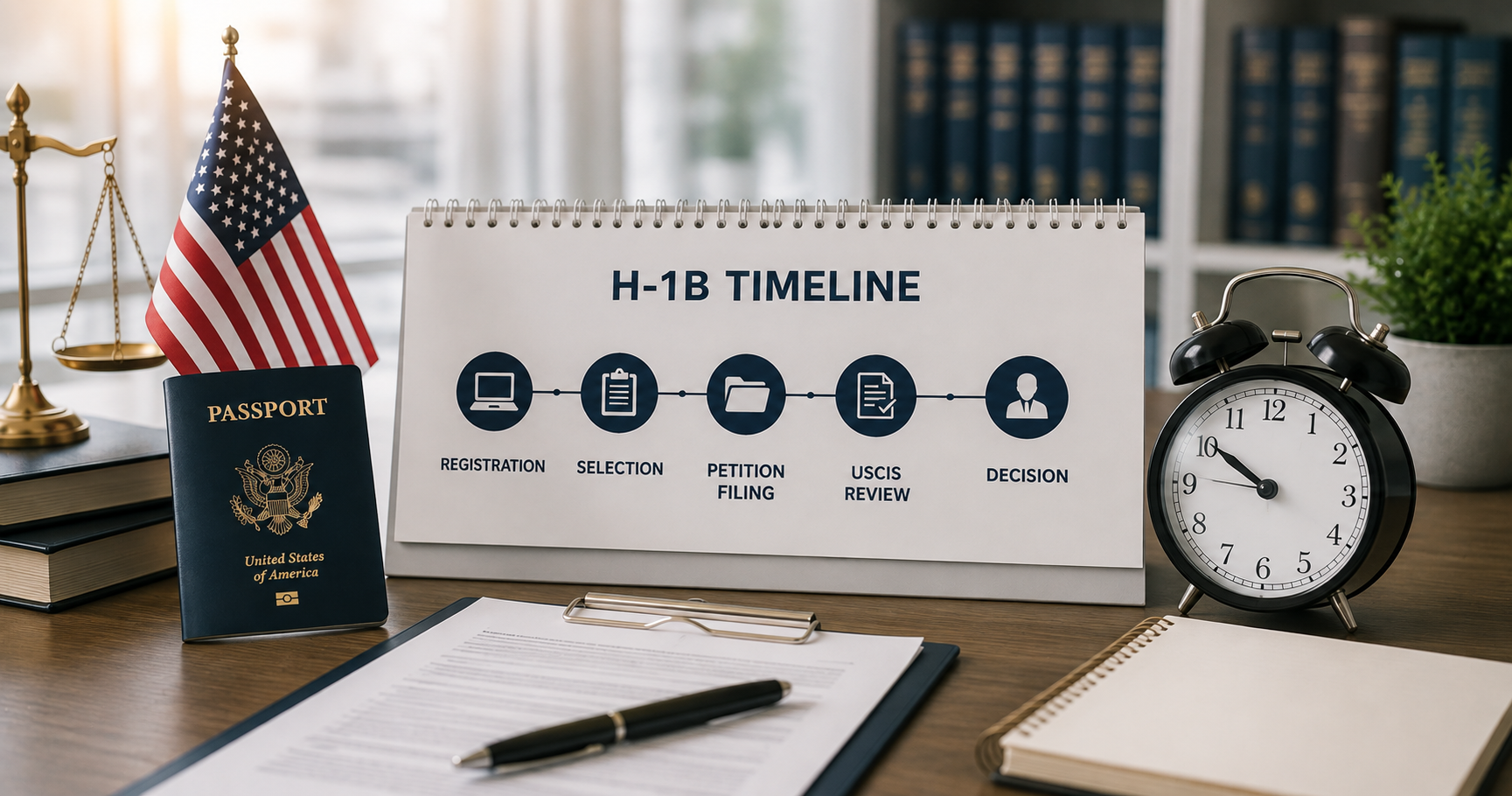
The H-1B visa process involves several stages, and the timing can vary depending on the type of petition, the employer, and the applicant’s circumstances. Understanding the general sequence can help employers and prospective workers plan ahead, gather documents, and respond promptly when action is required.
H-1B Registration and Selection
For H-1B cases subject to the annual numerical limit, the process generally begins with electronic registration during a designated registration period. Employers provide required information about prospective workers, and USCIS conducts a selection process when registrations exceed the available numbers. Only selected registrations can generally proceed to the next filing stage for cap-subject cases.
After selection, the employer may prepare and file the H-1B petition during the filing period specified by USCIS. The petition typically includes documentation concerning the employer, the offered position, the employee’s qualifications, and other required evidence. Preparing supporting documents before the registration period can make it easier to proceed promptly if a registration is selected.
Petition Processing and Decision
Once an H-1B petition is filed, USCIS reviews the submission. Processing times can vary and may change over time. USCIS may approve the petition, deny it, or issue a Request for Evidence (RFE) seeking additional information or documentation. An RFE can extend the overall timeline because the employer must prepare and submit a response within the applicable deadline.
Some petitions may qualify for premium processing, which provides an expedited adjudication process for an additional government fee when the service is available for the particular filing. Premium processing affects the USCIS adjudication timeframe, but it does not guarantee approval or eliminate the need to satisfy H-1B requirements.
If the beneficiary is outside the United States, additional steps may be required after petition approval, such as applying for an H-1B visa through a U.S. consulate before seeking admission. If the beneficiary is already in the United States, the petition may instead involve a request to change or extend status, depending on the circumstances.
Conclusion
The H-1B timeline can differ significantly from one case to another, particularly when selection, RFEs, status changes, or consular processing are involved. This article provides general information only and is not legal advice. Employers and prospective H-1B workers should consult a qualified U.S. immigration attorney to understand the applicable timeline and requirements for their individual circumstances.