
What Evidence Helps H-1B Visas Applications?

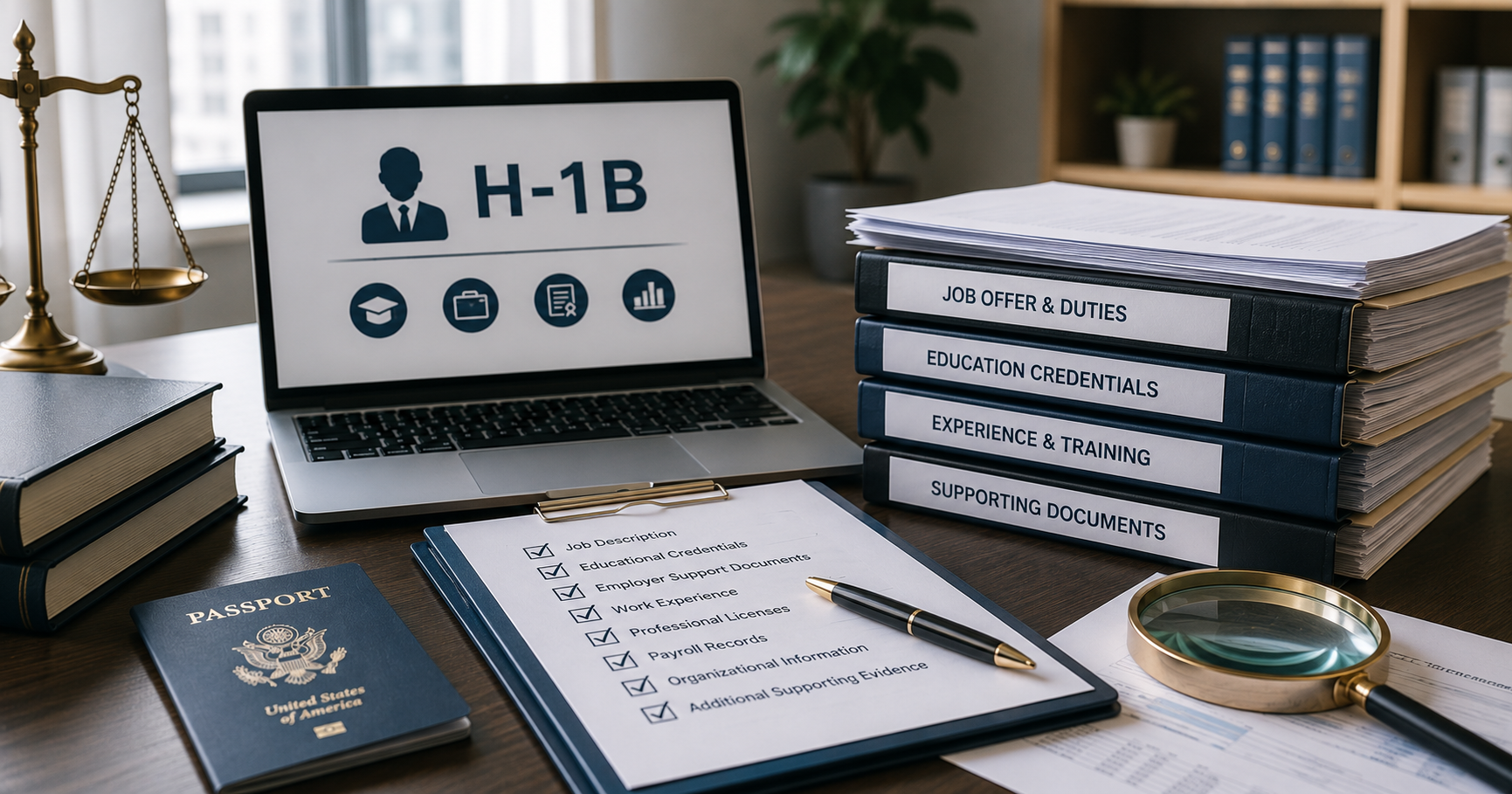
Employment Immigration: What Evidence Helps H-1B Visa Applications?
A well-prepared H-1B application depends on more than completing the required forms. Employers generally need to provide evidence showing that the offered position qualifies for H-1B classification and that the prospective worker meets the requirements for the position. Organizing clear, consistent documentation can help present the case effectively and address potential questions during the review process.
Evidence About the Job and Employer
One important category of evidence concerns the proposed employment. A detailed job description can explain the position’s responsibilities, required skills, educational background, and other relevant qualifications. The employer may also provide organizational information and documentation that helps demonstrate the nature of its business and the role the employee will perform.
The employment terms should be presented consistently throughout the petition. Information concerning the job title, duties, salary, work location, and employment relationship should generally correspond with the information in the Labor Condition Application and other supporting materials. When a position involves a third-party worksite or a less traditional work arrangement, additional documentation may be relevant to explain the employment structure and the work to be performed.
Evidence of the Worker’s Qualifications
Evidence of the prospective worker’s qualifications is another key part of an H-1B case. Depending on the circumstances, this may include academic degrees, transcripts, credential evaluations for foreign education, professional licenses, and documentation of relevant work experience or training.
The evidence should connect the worker’s background to the requirements of the proposed position. A degree by itself may not fully explain that connection. Supporting documentation can help demonstrate how the employee’s education, experience, or specialized knowledge relates to the duties of the offered position.
Keeping the Evidence Consistent
Consistency is important because USCIS reviews the petition as a whole. Differences between the job description, supporting letters, employment documents, and other evidence can create questions about the case. Employers should review the complete filing before submission and ensure that the evidence accurately reflects the actual employment arrangement.
Conclusion
The most useful H-1B evidence is generally accurate, relevant, and clearly connected to the requirements of the position and the worker’s qualifications. Because documentation needs can vary depending on the employer, occupation, work arrangement, and immigration circumstances, this article provides general information and is not legal advice. Employers and prospective H-1B workers should consult a qualified U.S. immigration attorney regarding the evidence appropriate for their individual circumstances.