
Do You Have to Disclose Traffic Tickets on Form N-400? Understanding the “Arrested, Cited, or Charged” Question

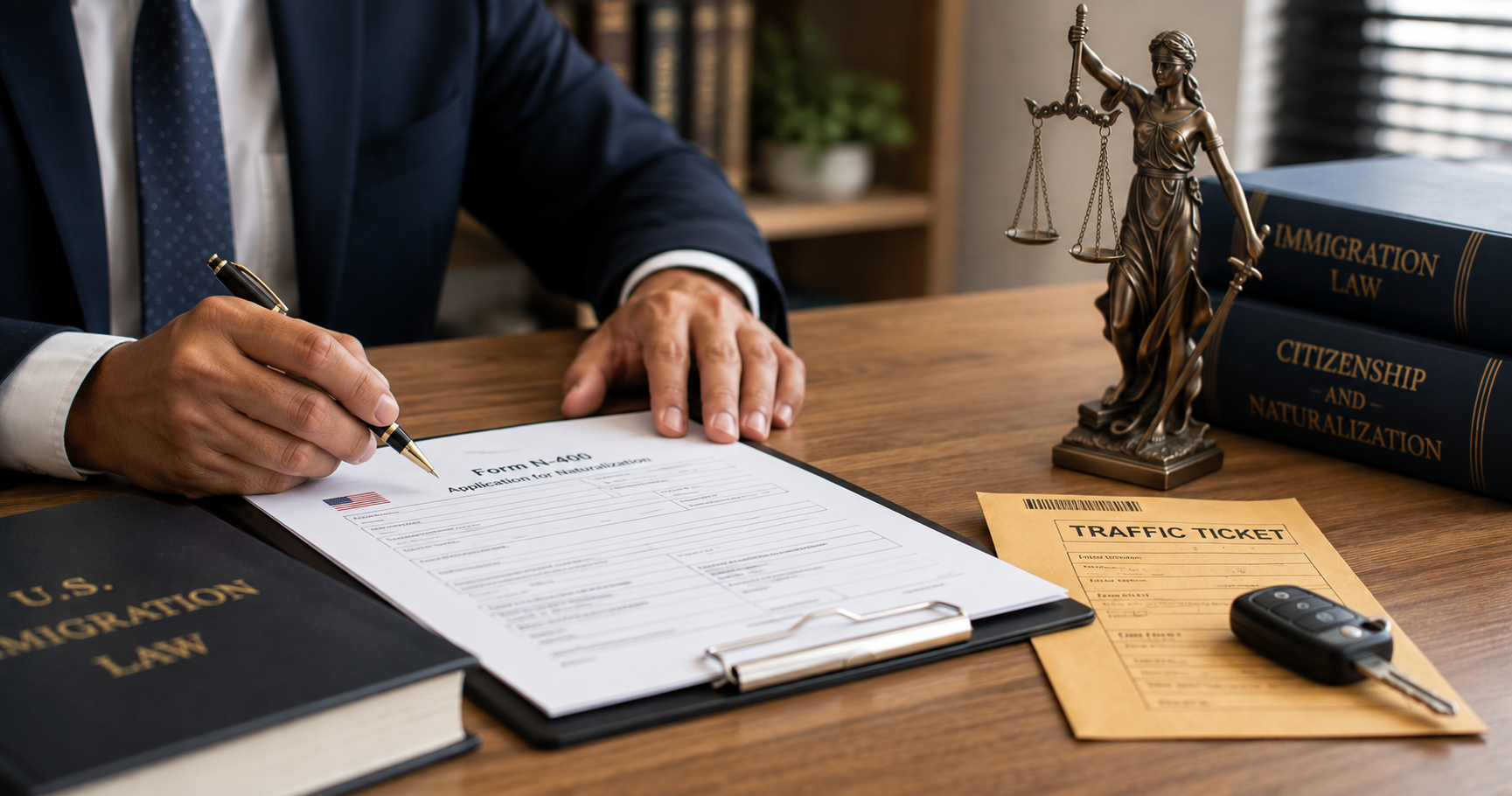 Do You Have to Disclose Traffic Tickets on Form N-400? Understanding the “Arrested, Cited, or Charged” Question
Introduction
Traffic tickets can create confusion when completing Form N-400, Application for Naturalization. The form asks applicants about arrests, citations, and criminal offenses, which may lead applicants to wonder whether every speeding ticket or parking violation must be reported. The answer can depend on the nature of the traffic incident and the circumstances surrounding it.
What Does the N-400 Ask About Traffic Incidents?
USCIS asks naturalization applicants about certain interactions with law enforcement and offenses as part of its evaluation of eligibility, including good moral character. The N-400 instructions specifically address traffic incidents and explain that documentation generally is not required for a traffic incident unless it involved alcohol or drugs, resulted in an arrest, or seriously injured another person.
This does not mean that every traffic ticket should automatically be ignored. The details matter. A routine traffic citation may be treated differently from an incident involving driving under the influence, an arrest, serious injury, or other potentially significant conduct. USCIS may also consider an applicant’s broader conduct when evaluating good moral character. In 2025, USCIS stated that reckless or habitual traffic infractions may be relevant to that assessment.
Why Accurate Disclosure Matters
Applicants should answer the N-400 questions carefully and consistently. USCIS instructions emphasize reporting offenses and explain that failing to disclose certain offenses can affect a naturalization application even when the underlying offense might not independently prevent naturalization.
Applicants should also distinguish between a simple traffic matter and a situation that involved additional legal consequences. For example, a citation connected to alcohol, drugs, an arrest, or serious injury may require substantially more attention and supporting documentation. Records such as court dispositions or other official documents may be important when the circumstances are more serious.
Conclusion
Whether a traffic ticket needs to be disclosed on Form N-400 depends on the facts and the wording of the current application and instructions. Because an inaccurate or incomplete answer can create complications during the naturalization process, applicants should review their history carefully before filing.
This article is for general informational purposes only and is not legal advice. Naturalization requirements can be fact-specific and may change over time. Anyone with questions about traffic citations, arrests, criminal records, or disclosure on Form N-400 should consult a qualified immigration attorney regarding their individual circumstances.