
California Personal Injury : What Evidence Is Important in Bicycle Accidents

California Personal Injury: What Evidence Is Important in Bicycle Accidents?
A bicycle accident can leave an injured cyclist facing medical expenses, lost income, and uncertainty about who is responsible. In California, evidence can play an important role in establishing how a collision occurred, whether someone acted negligently, and what losses resulted. Preserving relevant information early may help an injured cyclist support an insurance claim or personal injury lawsuit.
What Evidence Helps Establish How a Bicycle Accident Happened?
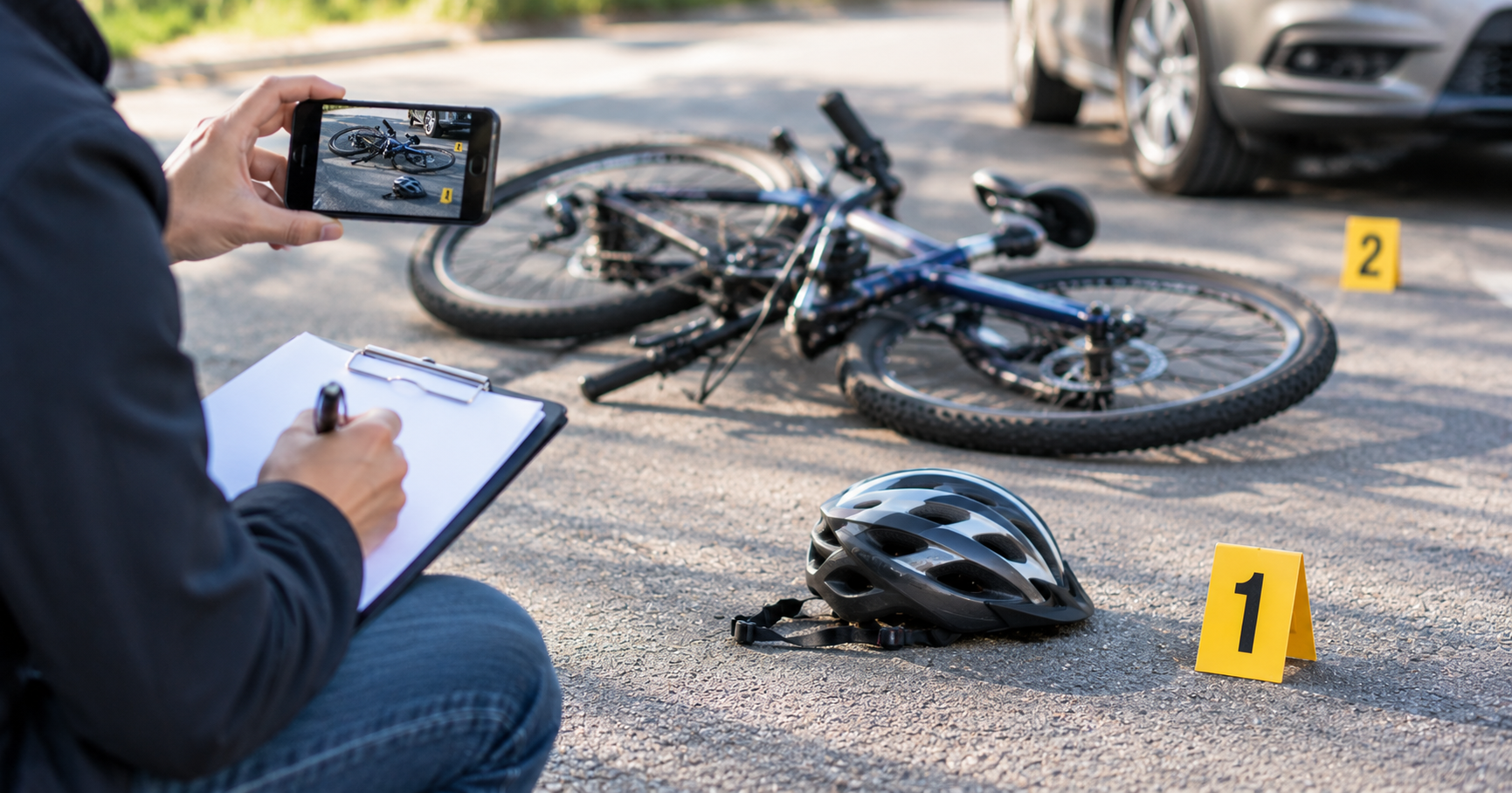
Photographs and videos can provide valuable details about the accident scene. If it is safe to do so, cyclists or witnesses can photograph the damaged bicycle, involved vehicles, road conditions, traffic signals, visible injuries, and any hazards that may have contributed to the collision. Nearby surveillance cameras or dashboard cameras may also capture important moments before or during the accident.
Witness statements can help explain what happened from different perspectives. Collecting witnesses’ names and contact information may allow their observations to be obtained later. An official accident report may also contain information about the parties involved, the location, and initial observations by responding officers. However, a report alone may not establish fault conclusively.
Physical evidence can also be relevant. A damaged helmet, broken bicycle components, clothing, and vehicle damage may help explain the nature of the collision. Keeping these items and avoiding unnecessary repairs or disposal before documenting the damage may help preserve useful information.
How Do Medical Records and Financial Documents Support a Claim?
Medical records help document the injuries sustained in a bicycle accident, the treatment received, and the medical provider’s findings. Seeking prompt medical attention is important for health and safety, and the resulting records may help connect the injuries to the incident. Photographs showing the progression of visible injuries may provide additional context.
Financial records can help establish the economic impact of the accident. Medical bills, pharmacy receipts, rehabilitation expenses, repair invoices, and wage statements may help demonstrate the losses incurred. If injuries affect a person’s ability to work in the future, additional documentation may be needed to support claims involving reduced earning capacity.
Evidence of pain and the effect of an injury on everyday activities may also be relevant. Keeping a factual record of recovery difficulties, physical limitations, and missed activities can help describe losses that are not reflected in bills alone.
Why Should Evidence Be Preserved Promptly?
Evidence can become harder to obtain over time. Surveillance footage may be erased, witnesses may become difficult to contact, and damaged property may be repaired or discarded. Keeping copies of relevant documents and maintaining an organized record of the accident and recovery can help prevent important details from being lost.
Conclusion
Strong evidence can help clarify responsibility and document losses after a bicycle accident in California. The information in this article is for general educational purposes only and is not legal advice. Because each accident involves different facts and evidentiary issues, consider consulting a qualified California personal injury attorney for guidance about your individual circumstances and legal options.