
California Personal Injury : What Evidence Is Important in Premises Liability

California Personal Injury: What Evidence Is Important in Premises Liability?
Introduction
When someone is injured because of an unsafe condition on another person’s property, evidence can play an important role in determining whether a premises liability claim may succeed. In California, photographs, witness accounts, maintenance records, and medical documentation can help explain how an accident happened, who may be responsible, and what losses the injured person experienced.
Evidence That Helps Establish Property Owner Responsibility
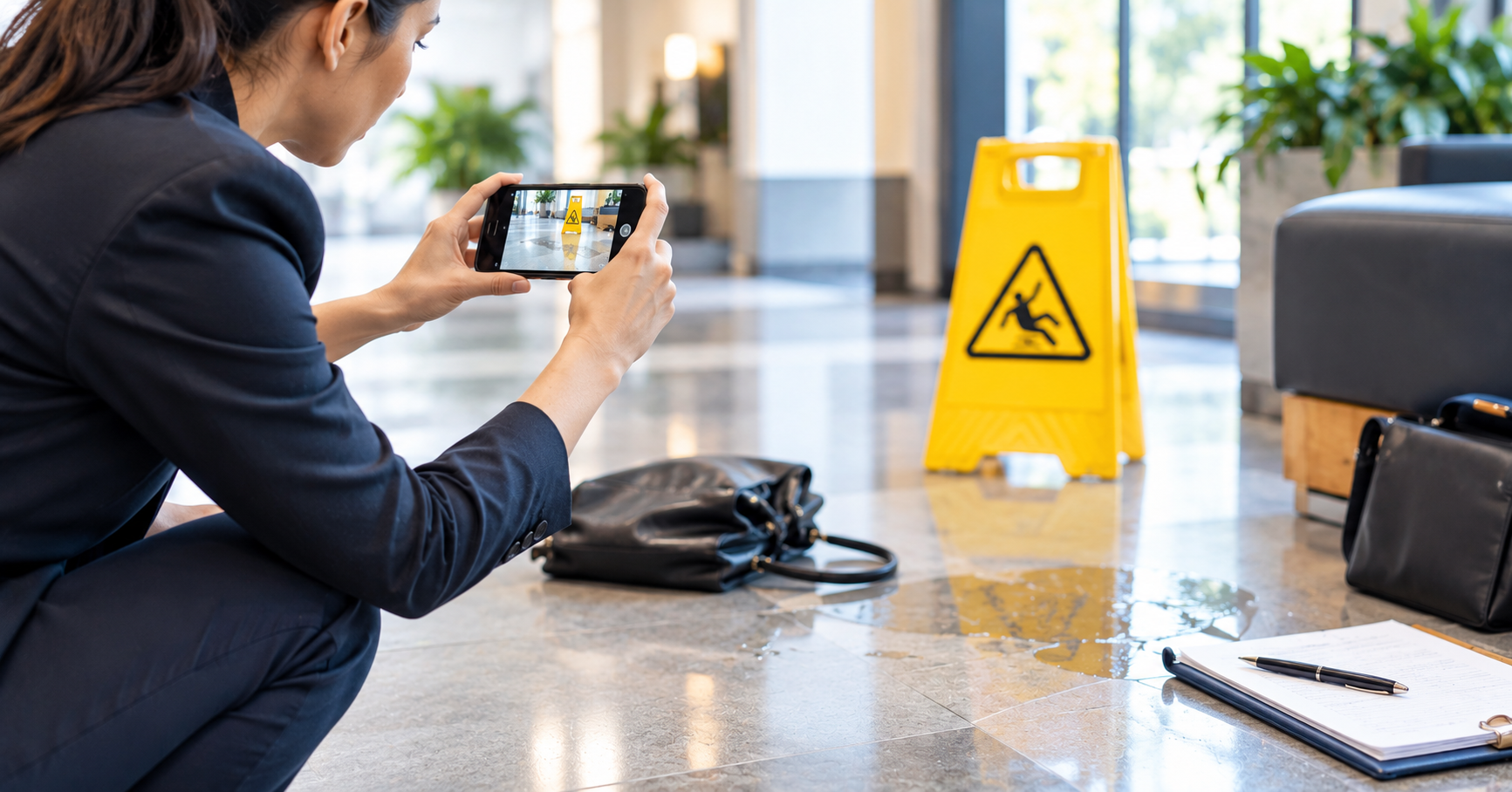
One of the first steps in evaluating a premises liability claim is documenting the dangerous condition that contributed to the injury. Photographs and videos of wet floors, broken steps, damaged walkways, poor lighting, missing handrails, or other hazards can help show what the property looked like around the time of the incident.
Timing matters because property conditions can change quickly. For example, a spill may be cleaned up shortly after a fall, or a damaged stairway may be repaired before the injured person can document it. When possible, photographs should capture the hazard, the surrounding area, warning signs, and any conditions that may have made the danger difficult to notice.
Witness statements can also be valuable. People who saw the accident or observed the dangerous condition beforehand may provide details about what happened and how long the hazard existed. Incident reports prepared by a business, property manager, or security team may provide additional information about the event.
Medical Records and Other Supporting Evidence
Medical records help document the nature and extent of an injury. Emergency department records, physician evaluations, diagnostic tests, treatment notes, and rehabilitation records can establish the medical care received and help explain how the injury affected the person’s daily activities.
Other evidence may help establish whether the responsible party knew, or reasonably should have known, about the dangerous condition. Relevant materials can include inspection logs, cleaning schedules, maintenance requests, repair records, and communications about earlier complaints. Surveillance footage may also show how the accident occurred or whether employees had an opportunity to identify the hazard. Such footage may be overwritten or deleted, so prompt preservation requests can be important.
Evidence of financial losses can help document the impact of an injury. Examples include medical bills, receipts for related expenses, employment records, and documentation of missed work or reduced earnings. Keeping these records organized can make it easier to assess the losses associated with the incident.
Conclusion
Strong evidence can help clarify how a premises liability accident occurred, whether a property owner or another party may be responsible, and what harm resulted. However, no single piece of evidence guarantees a successful claim. The outcome depends on the facts, applicable law, and the available proof.
This article provides general information about California premises liability law and is not legal advice. Anyone injured on another person’s property should consider consulting a qualified California personal injury attorney to discuss their circumstances, understand their legal options, and determine what evidence may be important to their individual claim.