
Can CBP Deny Entry to a Returning Lawful Permanent Resident? — Travel, Advance Parole and Returning to the United States

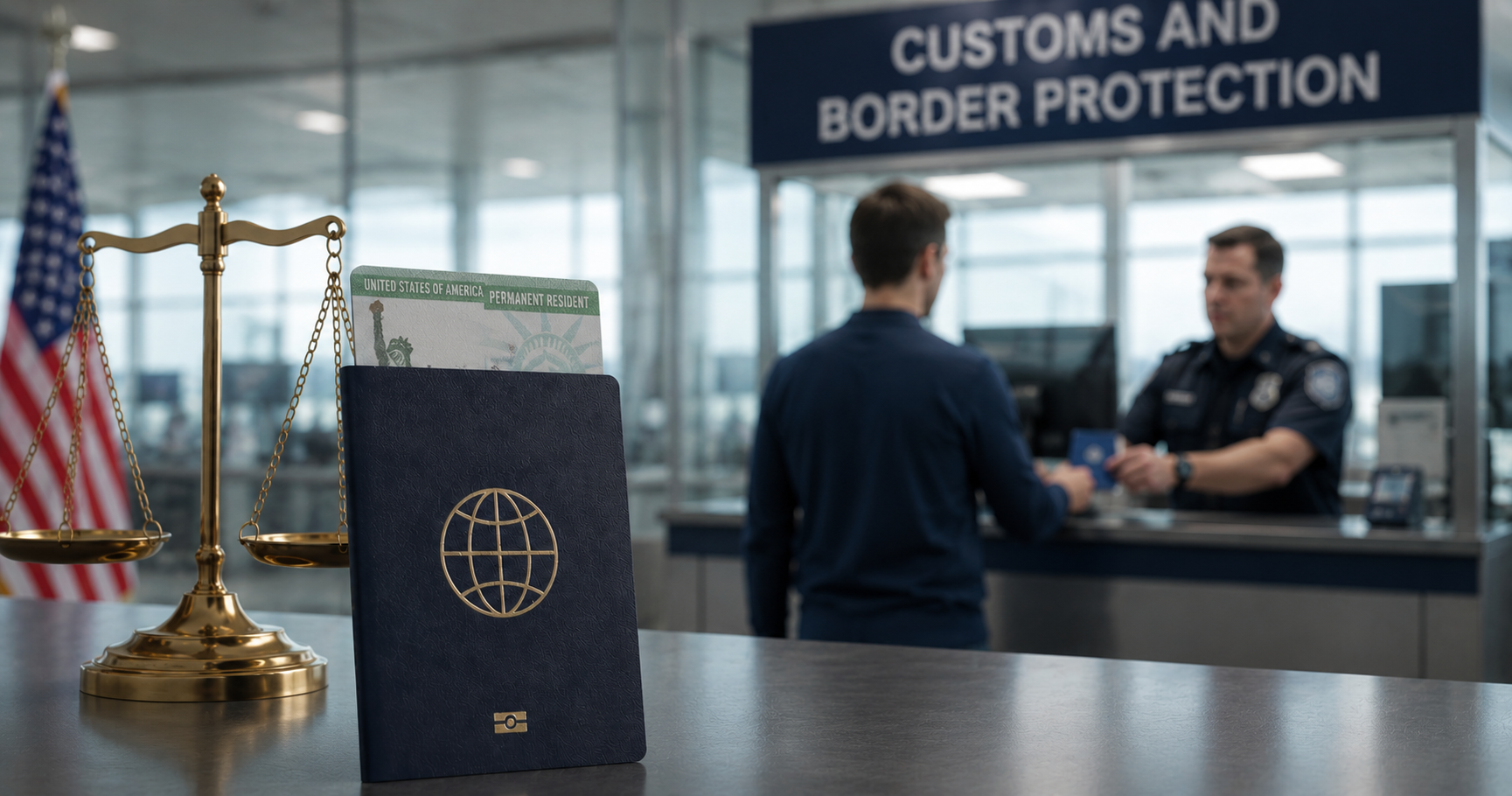
Can CBP Deny Entry to a Returning Lawful Permanent Resident?
Introduction
Lawful permanent residents (green card holders) generally have the right to return to the United States after international travel. However, presenting a valid green card does not mean that every return will be straightforward. U.S. Customs and Border Protection (CBP) officers have the authority to examine returning residents and determine whether additional immigration concerns exist. Understanding when entry may be questioned can help permanent residents prepare for international travel.
When Can CBP Question or Challenge a Green Card Holder’s Return?
CBP officers may examine a returning permanent resident’s travel history, length of absence, and connections to the United States. One common concern is whether the individual has abandoned permanent resident status by making another country their primary home.
An absence of more than six months may lead to additional questions about continued U.S. residence. An absence of one year or longer can create more serious complications, particularly if the individual does not have a valid reentry permit or another applicable travel document.
Other circumstances may also raise concerns, including certain criminal convictions, alleged immigration violations, or information suggesting that the individual obtained permanent residence improperly.
A lengthy absence does not automatically terminate a green card. CBP must consider the circumstances surrounding the individual’s travel and whether the person has abandoned permanent resident status. Officers may ask about U.S. employment, family relationships, property, tax filings, and the reasons for remaining abroad.
What Happens if CBP Suspects Abandonment of Permanent Residence?
If CBP believes a returning resident may have abandoned permanent residence, the individual may be referred for additional inspection. Officers may review travel documents, ask detailed questions, and examine supporting evidence.
In some situations, CBP may request that the individual sign Form I-407, Record of Abandonment of Lawful Permanent Resident Status. Signing this document generally means voluntarily giving up permanent resident status. Individuals should understand the consequences before signing and should not feel pressured to make a decision without understanding their rights.
If a permanent resident disputes an allegation of abandonment, the individual may have the right to have the issue considered by an immigration judge in removal proceedings. The appropriate legal process depends on the specific circumstances.
Maintaining evidence of continued U.S. residence, such as tax records, employment documentation, property records, and family ties, may help explain an extended absence.
Conclusion
CBP can question returning lawful permanent residents and, in certain circumstances, challenge their right to enter the United States. However, an extended absence or additional inspection does not automatically mean that permanent resident status has been lost.
This article provides general information and does not constitute legal advice. Because international travel and permanent resident status can involve complex immigration issues, individuals facing questions about their return should consult a qualified U.S. immigration attorney to understand their rights and options based on their specific circumstances.