
What Happens After USCIS Approves Form I-130?

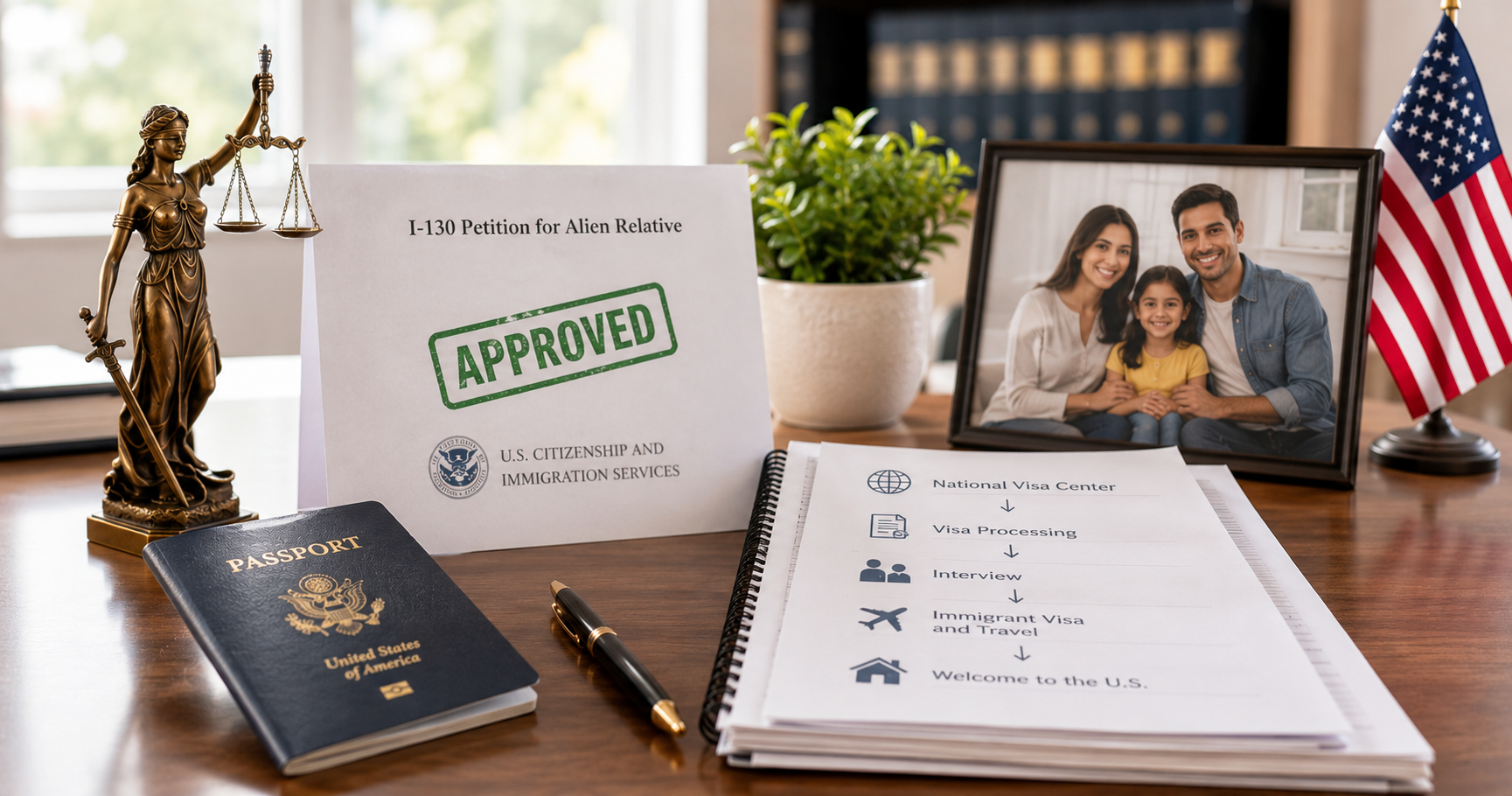
Family Immigration: What Happens After USCIS Approves Form I-130?
Introduction
Approval of Form I-130, Petition for Alien Relative, is an important milestone in the family-based immigration process. However, an I-130 approval does not by itself give the beneficiary a Green Card or permission to enter the United States. What happens next depends largely on whether the beneficiary is already in the United States and eligible to adjust status or is living abroad and will pursue an immigrant visa.
If the Beneficiary Is Outside the United States
When the beneficiary is abroad, an approved I-130 generally moves into the immigrant visa process. In many cases, the National Visa Center (NVC) becomes involved and provides instructions for submitting required forms, fees, and supporting documents. The beneficiary may eventually be scheduled for an immigrant visa interview at a U.S. embassy or consulate.
The timing can depend on the immigrant visa category and whether a visa number is immediately available. For immediate relatives of U.S. citizens, visa numbers are generally available without the same numerical limitations that apply to many family-preference categories. Other relatives may need to wait until their priority date becomes current before they can proceed to the final stages.
After the required processing is completed, the beneficiary may attend the visa interview. If an immigrant visa is issued, the person can generally travel to the United States for inspection and admission as a permanent resident, assuming all applicable requirements are satisfied.
If the Beneficiary Is Already in the United States
An approved I-130 may also support an application for adjustment of status when the beneficiary is eligible to become a permanent resident without leaving the United States. Adjustment of status is a separate process from the I-130 petition, and I-130 approval does not automatically mean that the adjustment application will be approved.
Eligibility can depend on factors such as the family relationship, the beneficiary’s immigration history, the availability of a visa number, and other requirements. USCIS may request additional evidence or schedule an interview before making a decision.
Applicants should also understand that an I-130 can establish the qualifying family relationship without resolving every immigration issue. Certain circumstances, such as previous immigration violations or other potential grounds of inadmissibility, may require additional legal analysis.
Conclusion
I-130 approval is an important step, but it is usually not the final step toward permanent residence. The appropriate next stage depends on the beneficiary’s location, family-based category, visa availability, and individual immigration history.
This article provides general information and is not legal advice. Immigration procedures and eligibility requirements can vary significantly from one case to another. Individuals with an approved I-130 should consider consulting a qualified U.S. immigration attorney to understand the next steps and address any issues specific to their circumstances.