
How to Prepare a Strong L-1 Visas Case

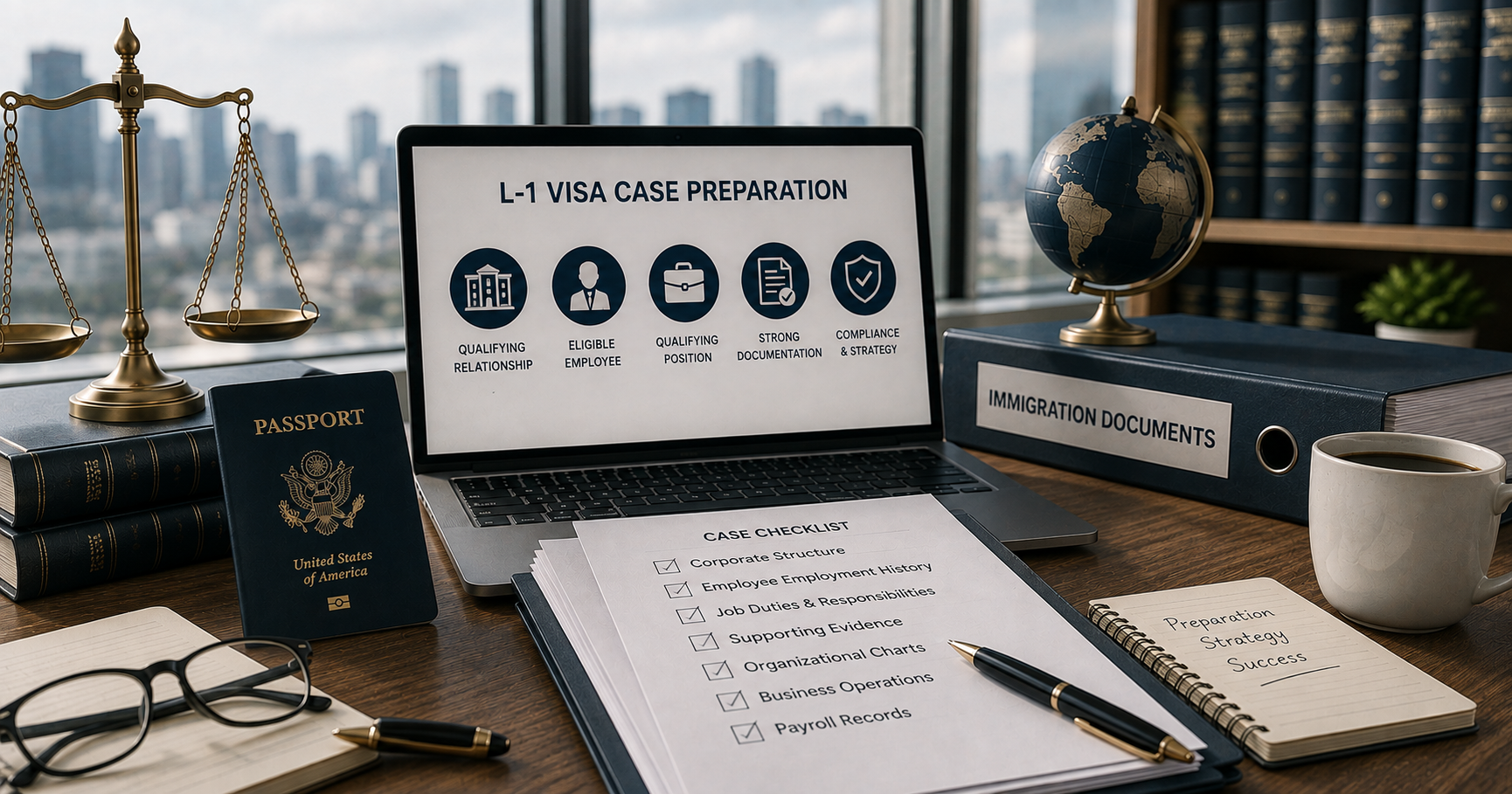
Employment Immigration: How to Prepare a Strong L-1 Visa Case
The L-1 visa can provide an important immigration option for multinational companies transferring qualified employees to the United States. However, a strong case requires more than demonstrating that an employee works for an international company. The petition should clearly establish the qualifying corporate relationship, the employee’s prior employment, and the proposed U.S. position.
Establish the Corporate Relationship and Employee’s Eligibility
A strong L-1 case should clearly document the relationship between the foreign and U.S. entities. Depending on the circumstances, the companies may need to demonstrate a qualifying parent, subsidiary, affiliate, or branch relationship. Corporate records, ownership documents, organizational information, and other evidence can help establish how the entities are connected.
The employee’s foreign employment should also be documented carefully. L-1 classification generally requires qualifying employment with the related organization abroad for the required period before the transfer. Employment records should accurately explain the employee’s position, responsibilities, and period of employment.
The proposed U.S. role must also fit the appropriate L-1 category. L-1A classification generally covers qualifying managers and executives, while L-1B classification generally applies to employees with specialized knowledge. The employee’s actual duties and responsibilities are more important than the job title alone.
Build Clear and Consistent Supporting Evidence
The petition should provide a detailed explanation of what the employee will do in the United States and why those duties meet the applicable L-1 requirements. Organizational charts, job descriptions, business records, employment documentation, and other relevant evidence may help present a clear picture of the proposed position.
Consistency is especially important. Dates, job duties, company names, corporate relationships, and other significant information should generally match throughout the petition and supporting documentation. Contradictory information can create unnecessary questions during the review process.
For a new U.S. office, additional evidence may be needed to demonstrate the nature of the proposed operation and the company’s plans for establishing the business. The appropriate evidence will depend on the particular circumstances of the organization and employee.
Conclusion
Preparing a strong L-1 petition involves careful documentation of the corporate relationship, qualifying employment, proposed position, and supporting evidence. This article provides general information only and is not legal advice. Because L-1 eligibility depends on the specific facts of each case, employers and prospective L-1 workers should consult a qualified U.S. immigration attorney regarding their individual circumstances.