
How to Avoid Delays With L-1 Visas

Employment Immigration: How to Avoid Delays With L-1 Visas
The L-1 visa process can help multinational companies transfer qualifying employees to the United States, but incomplete documentation or unclear information may slow the review process. Although applicants cannot control every aspect of government processing, careful preparation can reduce avoidable issues and make it easier to respond if questions arise.
Prepare the Case Before Filing
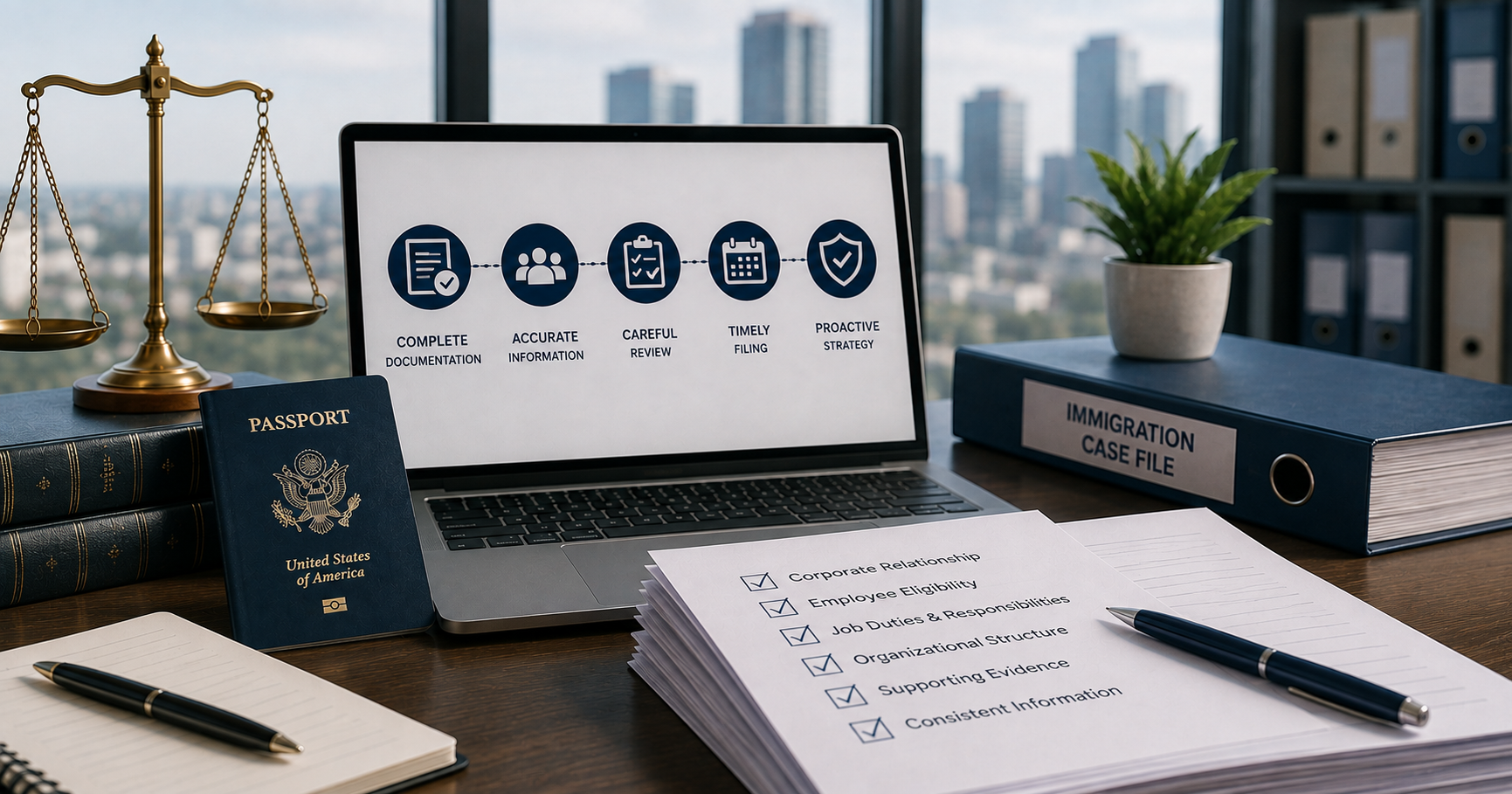
A strong L-1 petition should clearly document the qualifying relationship between the U.S. and foreign entities. Corporate records, ownership documentation, organizational information, and other evidence should tell a consistent story about how the companies are connected. Any discrepancies in company names, ownership, addresses, or corporate structure should be reviewed before filing.
The employee’s eligibility should also be documented carefully. Evidence of qualifying employment abroad should establish the employee’s position, responsibilities, and employment period. The proposed U.S. position should be described in enough detail to explain the employee’s expected duties and why those duties fit the applicable L-1 category.
Employers should avoid relying solely on job titles. For L-1A cases, the petition should clearly explain the employee’s managerial or executive responsibilities. For L-1B cases, the evidence should explain the employee’s specialized knowledge and how it relates to the organization and proposed U.S. role.
Review Evidence and Timing Carefully
Consistency across the entire petition is essential. Information concerning employment dates, job duties, company relationships, organizational structure, and work locations should generally match across forms and supporting documents. Conflicting information may lead USCIS to request additional evidence or clarification.
Employers should also begin collecting documents early, particularly when evidence must be obtained from a foreign entity. Translations, corporate records, employment verification, organizational charts, financial documents, and other supporting materials may take time to assemble and review.
If USCIS issues a Request for Evidence, the response should directly address the questions raised and be submitted within the applicable deadline. Promptly reviewing an RFE and gathering targeted evidence can help keep the case moving.
Conclusion
Avoiding unnecessary L-1 delays starts with accurate information, thorough documentation, and careful review before filing. Because the appropriate evidence depends on the companies, employee, position, and individual circumstances, this article provides general information only and is not legal advice. Employers and prospective L-1 workers should consult a qualified U.S. immigration attorney regarding their specific situation.