
Can You File Multiple I-140 Petitions in Different Employment-Based Categories? — Employment-Based Green Cards and Extraordinary Ability

Can You File Multiple I-140 Petitions in Different Employment-Based Categories?
Introduction
Individuals pursuing employment-based green cards may wonder whether they can submit more than one Form I-140, Immigrant Petition for Alien Workers, under different immigration categories. The answer is generally yes. U.S. immigration rules allow eligible individuals to have multiple I-140 petitions filed on their behalf, provided each petition independently meets the requirements of its respective category. This approach may offer additional flexibility when pursuing permanent residence.
Understanding Multiple I-140 Petitions
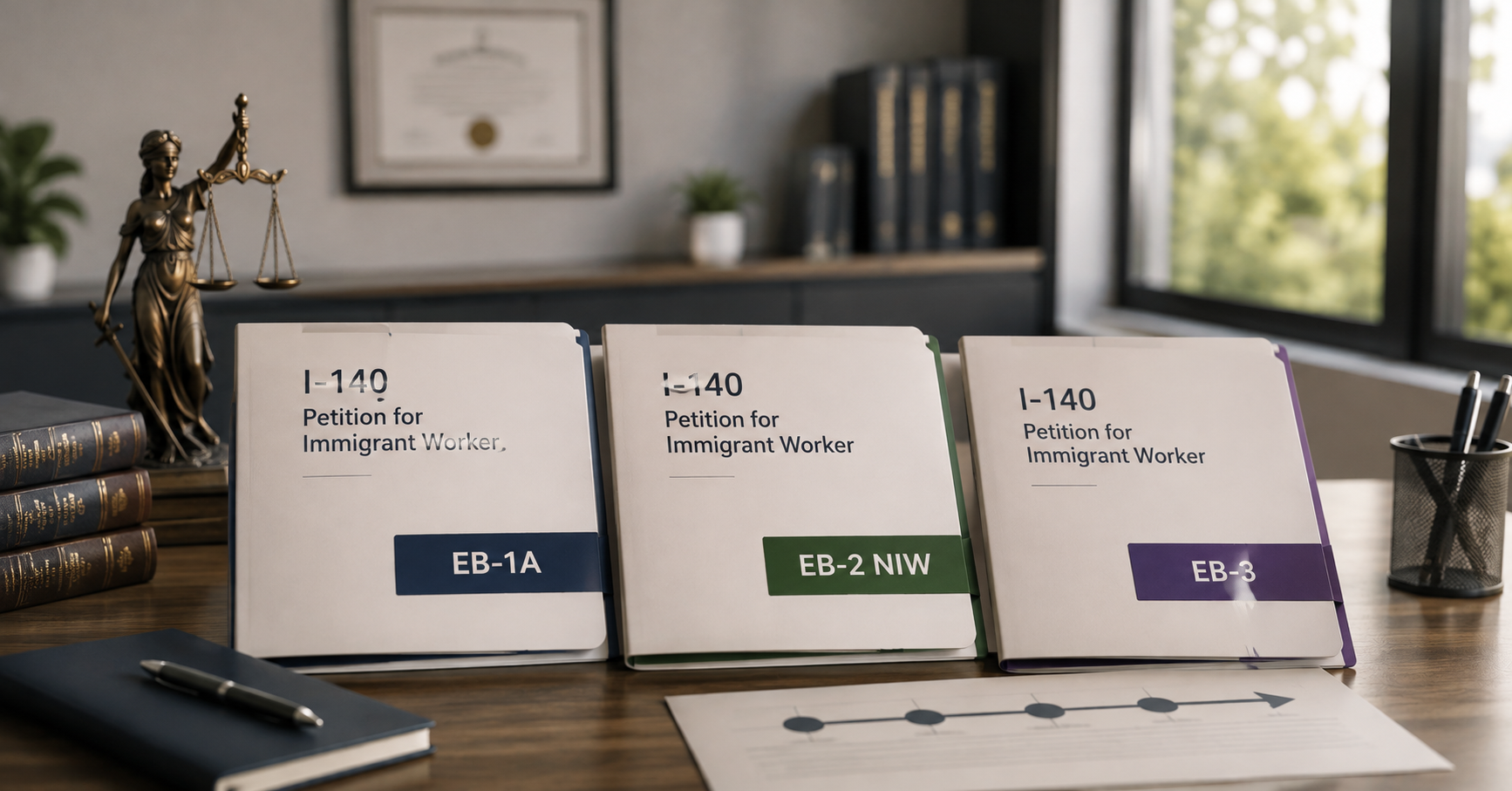
An individual may have separate I-140 petitions filed under different employment-based categories, such as EB-1A (extraordinary ability), EB-1B (outstanding professors and researchers), EB-2 (advanced degree professionals or individuals with exceptional ability), or EB-2 National Interest Waiver (NIW).
For example, a professional with significant industry achievements may qualify for an EB-1A petition while also meeting the educational and professional requirements for an EB-2 NIW. Similarly, an employee sponsored by a U.S. company may have an employer-filed EB-2 or EB-3 petition while independently pursuing an EB-1A petition.
Each petition is evaluated separately by U.S. Citizenship and Immigration Services (USCIS). Approval of one petition does not guarantee approval of another because the eligibility requirements and supporting evidence differ between categories.
Benefits and Important Considerations
Filing multiple I-140 petitions can provide alternative pathways to a green card. For instance, if one category experiences a lengthy visa backlog, another category may offer an earlier opportunity, depending on the applicant’s country of chargeability and priority date. Having more than one approved petition may also provide flexibility if employment circumstances change or a particular petition encounters difficulties.
Another potential advantage involves priority date retention. Under applicable rules, individuals with an approved I-140 may generally retain the earlier priority date for a subsequent qualifying employment-based petition. However, certain exceptions apply, including revocation based on fraud, willful misrepresentation, material error, or invalidation of the underlying labor certification.
Applicants should also understand that multiple I-140 approvals do not mean they receive multiple green cards. They ultimately obtain permanent residence through an eligible immigrant visa category when a visa becomes available and all other requirements are satisfied.
Additionally, employer-sponsored petitions may depend on continued qualifying employment opportunities, while self-petition categories such as EB-1A and EB-2 NIW have different requirements. Applicants should ensure that every petition contains accurate information and sufficient evidence.
Conclusion
Filing multiple I-140 petitions in different employment-based categories is generally permitted and may create additional options for obtaining permanent residence in the United States. However, each category has distinct eligibility standards, documentation requirements, and potential advantages.
This article provides general information and does not constitute legal advice. Immigration eligibility and priority date rules depend on individual circumstances. Consult an experienced U.S. immigration attorney to determine which employment-based categories may be appropriate for your situation.